
- Details
- Category: Mobile News
Dec. 19, 2018
Gemalto is working with Mastercard and banking group Intesa Sanpaolo on a pilot program for Italy's first biometric contactless payment card.
Gemalto, an Amsterdam-based digital security firm, said the technology allows customers to tap cards at a point-of-sale terminal and authenticate the transaction with their fingerprint, without the need to enter a PIN code or sign a receipt, according to a press release.
The initial pilot program is scheduled to launch in Milan, Turin and Rome for a period of 16 weeks, according to Gemalto.
"We are proud to have undertaken the first step to introduce a card in Italy a card which technology offers consumers clear and concrete benefits, following our choice to anticipate and facilitate the diffusion of innovative technologies functional to people's everyday banking," Cinzia Bruzzone, retail manager at Intesa Sanpaolo, in the release.
Intesa Sanpaolo is the largest banking group in Italy, with 11.9 million customers and 4,400 branches, according to the release.
Topics: Contactless / NFC, EMV, Mobile Banking, Region: EMEA, Security
Companies: Gemalto, MasterCard
Sponsored Links:
Related Content
Latest Content
- Details
- Category: Mobile News
Dec. 18, 2018 | by David Jones
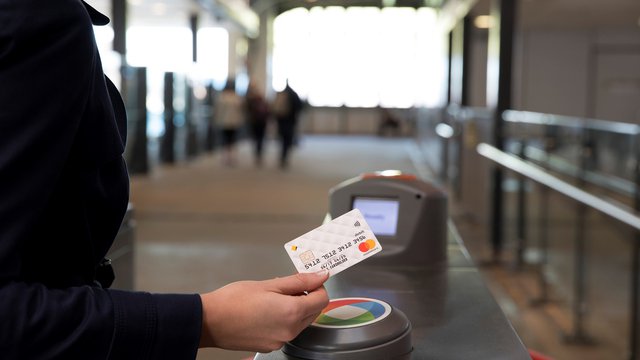
Ferry rider in Sydney, Australia using Mastercard for contactless entry.
As transit systems around the world look to upgrade their infrastructure, one of the key areas of improvement center around enabling contactless payments to allow consumers to scan payment cards or use mobile devices to pay for fares.
The enhancements are meant to accomplish multiple tasks, from reducing the overhead costs for transit agencies to cutting the amount of time commuters spend waiting in lines to reload fare cards or buy individual tickets.
The technology is proving to be a game changer, according to Matt Blanks, vice president, enterprise partnerships at Mastercard.
"Transit agencies no longer need to act as a currency exchange, converting money into transit dollars, which has a huge cost for the agency with infrastructure and staffing — and for the customer, they simply tap and go directly on the metro gateline or bus reader, simply using the [card] they already carry," he told Mobile Payments Today in an email.
He said in order for transit agencies to be able to accept contactless payments, they need to enable their card readers to accept EMV transactions, which is a similar conversion required of retailers. For contactless payments to be accepted at scale, he said there needs to be issuance and acceptance of contactless products.
Mastercard provided a case study showing in the London's public transit system, where about 17 million trips per week are made using contactless payments, representing about 45 percent of trips on the Tube, ferries and buses. The technology reduced the cost of collecting fares from about 14 percent of revenue to about 9 percent. In addition, every time a PAYG transaction is validated, it takes about 300 milliseconds.
Blanks said surveys have shown satisfaction scores have increased in London due to contactless payments and more commuters have used trains and buses instead of cars and other alternate options as a result.
"Qualitative surveys conducts for Transport for London illustrate that across all demographic groups, the primary benefits of contactless are the same — it saves time, saves money, is easy to use and eliminates the need to repeatedly load money onto another card," he said.
Mastercard has been working with transit systems around the world to implement contactless payments. In March the company announced plans to convert the light rail and ferry system in Sydney, Australia to contactless payment.
Technology upgrades
Public transit systems converting to contactless payments are effectively serving two different customer bases, according to Xavier Larduinat, manager for innovation at Gemalto. One set includes regular customers that buy weekly or monthly commuter passes and the other includes occasional riders, including tourists, who may only need single use tickets, he said in an email interview.
For occasional riders, it will negate the need to stand in long ticket lines, increasing speed and throughput, he said. Most transit systems are selecting EMV infrastructure, and contactless enables all form factors, including mobile, card and wearables, to be used for tap-and-go infrastructure. Any EMV card from any issuer around the world can be used, which benefits these type of users.
For regular commuters, the change is toward account-based ticketing and the technology shifts toward a mobile door-to-door offering, which includes all components of a journey, including bus, train, ferry or other options under a unified ticketing option
"Contactless becomes the de facto, uber convenient method of payment for regular commuters once the mobile devices they already carry each day are compatible with all readers within the system."
American mass transit
In the U.S. several of the nation's leading transit systems have announced plans to convert to contactless payments or expand existing tap and go systems.
Systems like Chicago, Philadelphia and New York City have either launched or announced plans to convert respective systems to contactless payments, which payment and public transit experts say will help drive new efficiencies and boost ridership on those rail and bus lines.
"It's a very complex and slow transition," said Randy Vanderhoof, director of the U.S. Payments Forum, which has studied contactless payment transition in the public transit system for years, in a phone interview.
He noted Chicago took five years to get the system implemented, yet parts of the system are still being implemented. In Washington D.C., a contactless system was worked on for three years, but was abandoned due to changes in personnel and cost issues.
NJ Transit in June announced a contract renewal with Conduent Transport of Somerset. N.J., to develop the ability to accept mobile payment and open contactless bank cards on the commuter line, according to a release from the agency.
The agreement called for the installation of 2,500 validators on buses and light rail systems to allow for contactless cards, barcode scanners and mobile apps. NJ Transit is also planning a contactless fare card with the ability to add cash value at local retailers. The NJ Transit mobile app currently accepts Apple Pay and Google Pay as payment for fares.
"This is a growing market and as more contactless cards enter into our payment space our fare modernization program has been initiated so that our systems will be ready to accept them," Nancy Snyder, spokesperson for NJ Transit, said via email.
Photo credit: Mastercard
Topics: Contactless / NFC, EMV, Mobile Apps, Mobile/Digital Wallet, Region: Americas, Region: EMEA, Regulatory Issues

David Jones
David Jones is a veteran business and technology journalist, with three decades of experience writing about business travel, real estate and technology.
Since 2015 he covered a range of technology stories for the ECT News Network, which includes the E-Commerce Times, TechNewsWorld, LinuxInsider and CRM Buyer, writing about cybersecurity, artificial intelligence, machine learning, open source computing and privacy issues among others,. He recently covered FinTech issues for PYMNTS.com.
He worked as a staff writer for Bloomberg Business News and an online reporter for Crain’s New York Business. He has written for numerous media organizations, including Reuters, The New York Times, The Real Deal, Continental, City Limits and The Nation.
He was previously awarded the George Washington Williams Fellowship for Journalists of Color by the Independent Press Association.
Sponsored Links:
Related Content
Latest Content
- Details
- Category: Mobile News
Dec. 18, 2018
H&M Home has launched a holiday gift guide partnership with Google that uses Google Assistant voice technology to allow ordering on mobile phones and Google Home smart devices, according to a news release.
H&M customers can order from the catalogue and make payment using voice controls built into the Google Assistant technology. Customers need an Android device with Google Assistant and a credit card linked to a Google account in order to make purchases, H&M Spokesman Patrick Shaner told Mobile Payments Today via email.
The voice shopping capabilities expands an existing relationship between H&M and Google after the companies released the H&M HOME Stylist earlier this year, which was one of the first voice applications to be unveiled in the home segment. The companies worked with Stripe to expand the relationship to allow for voice-controlled purchases.
"This fast growing technology is opening up new possibilities for the retail industry to inspire and interact with customers," said Anders Sjoblom, managing director of H&M Home, in the release. "We are excited to take the lead when it comes to shaping the voice commerce of the future, to try this new technology and to have our customers to be a part of this journey."
Topics: Mobile Apps, Mobile Payments, Retail
Companies: Google
Sponsored Links:
Related Content
Latest Content
- Details
- Category: Mobile News
Already registered? Login Now
*
CountryUnited StatesAfghanistanÅland IslandsAlbaniaAlgeriaAmerican SamoaAndorraAngolaAnguillaAntarcticaAntigua and BarbudaArgentinaArmeniaArubaAustraliaAustriaAzerbaijanBahamasBahrainBangladeshBarbadosBelarusBelgiumBelizeBeninBermudaBhutanBoliviaBonaire, Sint Eustatius and SabaBosnia and HerzegovinaBotswanaBouvet IslandBrazilBritish Indian Ocean TerritoryBruneiBulgariaBurkina FasoBurundiCabo VerdeCambodiaCameroonCanadaCayman IslandsCentral African RepublicChadChileChinaChristmas IslandCocos (Keeling) IslandsColombiaComorosCongoCongo (the Democratic Republic of the)Cook IslandsCosta RicaCôte d'IvoireCroatiaCubaCuraçaoCyprusCzechiaDenmarkDjiboutiDominicaDominican RepublicEcuadorEgyptEl SalvadorEquatorial GuineaEritreaEstoniaEthiopiaFalkland Islands [Malvinas]Faroe IslandsFijiFinlandFranceFrench GuianaFrench PolynesiaFrench Southern TerritoriesGabonGambiaGeorgiaGermanyGhanaGibraltarGreeceGreenlandGrenadaGuadeloupeGuamGuatemalaGuernseyGuineaGuinea-BissauGuyanaHaitiHeard Island and McDonald IslandsHoly SeeHondurasHong KongHungaryIcelandIndiaIndonesiaIranIraqIrelandIsle of ManIsraelItalyJamaicaJapanJerseyJordanKazakhstanKenyaKiribatiKuwaitKyrgyzstanLaosLatviaLebanonLesothoLiberiaLibyaLiechtensteinLithuaniaLuxembourgMacaoMacedoniaMadagascarMalawiMalaysiaMaldivesMaliMaltaMarshall IslandsMartiniqueMauritaniaMauritiusMayotteMexicoMicronesia (Federated States of)MoldovaMonacoMongoliaMontenegroMontserratMoroccoMozambiqueMyanmarNamibiaNauruNepalNetherlandsNew CaledoniaNew ZealandNicaraguaNigerNigeriaNiueNorfolk IslandNorth KoreaNorthern Mariana IslandsNorwayOmanPakistanPalauPalestine, State ofPanamaPapua New GuineaParaguayPeruPhilippinesPitcairnPolandPortugalPuerto RicoQatarRéunionRomaniaRussiaRwandaSaint BarthélemySaint Helena, Ascension and Tristan da CunhaSaint Kitts and NevisSaint LuciaSaint Martin (French part)Saint Pierre and MiquelonSaint Vincent and the GrenadinesSamoaSan MarinoSao Tome and PrincipeSaudi ArabiaSenegalSerbiaSeychellesSierra LeoneSingaporeSint Maarten (Dutch part)SlovakiaSloveniaSolomon IslandsSomaliaSouth AfricaSouth Georgia and the South Sandwich IslandsSouth KoreaSouth SudanSpainSri LankaSudanSurinameSvalbard and Jan MayenSwazilandSwedenSwitzerlandSyriaTaiwanTajikistanTanzaniaThailandTimor-LesteTogoTokelauTongaTrinidad and TobagoTunisiaTurkeyTurkmenistanTurks and Caicos IslandsTuvaluUgandaUkraineUnited Arab EmiratesUnited KingdomUnited States Minor Outlying IslandsUnited States of AmericaUruguayUzbekistanVanuatuVenezuelaVietnamVirgin Islands (British)Virgin Islands (U.S.)Wallis and FutunaWestern SaharaYemenZambiaZimbabweBy clicking the button above, you agree to our Terms of Service and Privacy Policy and to allow your personal information to be shared with the sponsor of this content. Your information will NOT be shared with anyone else.
- Details
- Category: Mobile News
Dec. 18, 2018
Google has expanded Paysafecard to Greece, resulting in the prepaid online card partnership becoming available in five additional countries in Europe, including Spain, U.K., France and Germany.
Paysafecard, according to a news release, lets customers without bank accounts, or those who don't want to put bank card information online, to make purchases in the Google Play store. Customers can use the service by entering a 16 digit account PIN.
Since June, Google and Paysafe have launched the service in Poland, the Czech Republic, Slovenia, Slovakia and Cyprus. The latest expansion makes the service available in 10 countries in Europe.
The companies said the prepaid card can be purchased at about 600,000 retail outlets worldwide. The release cited a study that stated 30 percent of the European population either don't have bank accounts or credit cards, or don't want to enter their financial information online.
Topics: Mobile Apps, Mobile Payments, Region: EMEA
Companies: Paysafe Group, Google
Sponsored Links:
Related Content
Latest Content
More Articles …
- CitiDirect pilot testing fingerprint, facial recognition in mobile trading app
- Conduent named by Flemish transit operator De Lijn for contactless fare rollout
- Sigue Corp launches mobile app for international funds transfer in Latin America
- Korea's JB Financial signs with Indonesia's CIMB Niaga to export banking platform
Page 131 of 1447