
- Details
- Category: Mobile News
June 6, 2019
 Airfox, a Boston-based fintech, announced the launch of banQi, a challenger bank in Brazil that is aimed at 50 million consumers who cannot afford or access a traditional financial institution.
The bank, developed in partnership with retailer Via Varejo, will offer banking, bill payment and other services through 1,000 physical locations in local neighborhoods across the country. The retailer has about 50 million customers.
"Trust between people and institutions is the key to financial inclusion and social development," said Victor Santos, founder and CEO at Airfox. "Airfox is shifting the financial paradigm in emerging markets by providing the underserved and those lacking traditional credit history with access to free, democratic financial solutions that are built on inclusion and trust."
The retailer operates in 400 cities across the country through its Casas Bahia stores, and the partnership will allow users to make deposits and make monthly payments on their Casas Bahia carnes, which is a micro finance program that allows customers to make monthly payments on purchases.
Airfox plans to rollout a debit card with 1% cashback on transactions starting this summer.
Topics: Mobile Apps, Mobile Banking, Region: Americas
Sponsored Links:
Related Content
Latest Content
- Details
- Category: Mobile News
June 6, 2019

By Jack Ehlers, director of product, payment networks and business development at PPRO
Latin America has historically been one of the most economically diverse continents in the world. Richer nations such as Uruguay and Chile have a GDP per capita that compares with those of mid-ranking EU states. Poorer countries however, such as Peru and Colombia, have a GDP per capita that's lower than the poorest EU member state.
Today, Latin America's economy is on the rise and growing once again. In 2019, 155.5 million people in the region are expected to buy goods and services online, which is a dramatic increase from 126.8 million in 2016. Recent figures have also shown that while Latin America's e-commerce market remains small, in comparison with Asia Pacific or North American, the area's retail e-commerce sales are projected to grow from $49.8 billion in 2016 to $79.7 billion in 2019.
With a population of 386 million, there is an abundance of potential opportunities for e-commerce success in this region. However, the economic environment in Latin America also presents some challenges. But this is not a reason to shy away from it. Afterall, the value of online commerce is estimated to be worth $41.22 billion. What's interesting however, is that the booming e-commerce growth in recent years took place against a backdrop of a struggling economy. While many wouldn't expect a growth in e-commerce during economic unrest, this surge mostly came from the rise in internet and smartphone usage which provided access to goods from abroad that were previously out of reach.
Local growth driven by e-commerce
Latin America's economy has traditionally been dominated by primary commodities. Low value raw materials and intermediate goods make up the overwhelming bulk of exports. Latin America's abundance of, and thus reliance on, raw materials worked to its advantage in the early-to-mid 2000s. Between 2002 and 2007, Chinese consumption of commodities exported from South America increased, on average seven-fold.
The growth in the commodities trade crowded out other economic activity. From the 1970s up until the late 1990s, South American economies diversified and become less reliant on a small number of exports. However, in the early 2000s, this process went into reverse. This not only left private prosperity highly dependent on a narrow range of economic activity, it did the same for state revenues. Before oil prices began to decline in 2014, for instance, 47% of Venezuela's public revenue came from taxing the commodities trade, primarily oil.
By 2008, with the financial crisis already in full swing, commodity prices were falling. After this period, a normalisation of commodity pricing in the post global financial crisis period between 2010 and 2016 translated into significantly lower growth rates. But this all changed in 2016, helped by the explosion of e-commerce in the region. Now, Latin America looks to be on a recovery path and the region generates better results, with e-commerce at the forefront of this growth.
Overcoming payments and logistic challenges
Latin America still has much to overcome, especially when it comes to payment processing. In Latin America, access to secure, credit card-based payment methods are limited. In fact, many people in the region do not use a formal banking system. Amongst the logistical nightmare of a cash-based society for ecommerce providers targeting the region, merchants have found ways to manage this reality. eShopWorld reported that 36% of online consumers prefer to utilise PayPal, and 35% use Cash on Delivery.
Interestingly, in the region's largest markets – Brazil and Mexico – consumers' preferred payment method is via credit card. These two markets hold enormous potential for e-commerce in Latin America. There are currently 66.4 million e-commerce users in Brazil, with an additional 28.2 million expected to be shopping online by 2021. Four years from now, these 94.6 million e-commerce users are anticipated to spend an average of $307 online. By comparison, in Mexico, there are 59.4 million internet users, accounting for just under half of the population, leaving room for substantial growth. The number of Mexican internet users is equivalent to the entire population of the UK.
However, it isn't all plain sailing even when targeting the most affluent populations in Latin America. Logistics, traffic and infrastructure are a major issue for the region and has a detrimental impact on sales, where logistics alone can amount to 15% of the cost of what's sold. Many online retailers have put logistics on the back burner for years, focusing on the user experience through purchase, and as a result it can take weeks for a purchase to arrive at a customer's door. In order to remain successful in the booming e-commerce era, investment in this area could result in more e-commerce sales in smaller regions.
Shifting attitudes
A return to growth, even if it's still in its early stages, provides a better environment for retail than the economic stagnation and contraction of recent years within Latin America. The region's consumers want premium products and are willing to pay for them. But that doesn't mean they are not price conscious — 79% say that they are changing their shopping behaviour to save money on their purchases.
Latin American consumers are also willing to buy services and digital goods online, but there is still a high degree of openness to the idea of digital shopping for physical goods. Almost 40% of consumers, for instance, said they would be willing to buy food-takeaways, toys, and beauty products, using their smartphone.
After years of recession, there is an increasing demand for e-commerce in Latin America, but customers are highly price conscious so any merchant hoping to meet that demand and take advantage of the opportunities available will need a highly focussed and localised approach to win consumer acceptance.
Cover photo: iStock
Topics: Region: Americas, Trends / Statistics
Sponsored Links:
Related Content
Latest Content
- Details
- Category: Mobile News
June 6, 2019
Step Mobile Inc., a mobile banking app for teens and families, said it raised $22.5 million in Series A funds led by Stripe.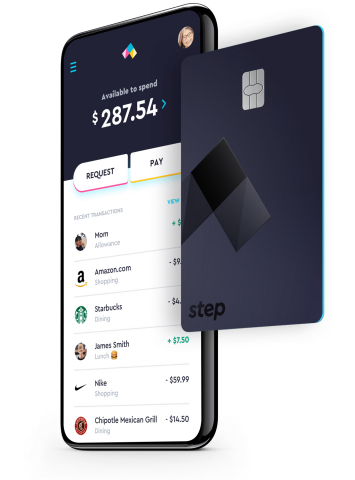
The funding round was backed by actor and rap icon Will Smith’s Dreamer’s fund, rapper Nas, Wndrco, retired NFL great Ronnie Lott, Matt Rutler, Kevin Gould and Noah and Jonah Goodhart. Existing investors Crosslink Capital, Collaborative Fund and Sesame Ventures also participated in the round.
"Teens and parents are ready for a seamless mobile banking experience, one meticulously designed for their needs," co-founder and CEO CJ McDonald said. "We’ve partnered with the best in the business to create the right solutions for the next generation."
Step offers an FDIC-insured, no-fee mobile account backed by Evolve Bank and Trust, with a co-branded Mastercard debit card, a savings account offering up to 2.5% interest, access to 35,000 no-fee ATM machines and the ability to send and receive funds from a mobile app.
Parents are provided the ability to set and monitor spending limits and account holders have access to digital wallets like Apple Pay and Google Pay.
Step has begun beta testing the mobile app to friends and family and has a waiting list of 500,000 people in less than three months since the initial launch.
Topics: Mobile Banking, Mobile/Digital Wallet
Companies: Step Mobile Inc., MasterCard, Stripe
Sponsored Links:
Related Content
Latest Content
- Details
- Category: Mobile News
June 6, 2019
Online socks retailer Bombas reached a $65,000 settlement with the New York State Attorney General for failure to promptly notify customers of a data breach that impacted nearly 40,000 customers.
NY AG Leticia James disclosed that in 2014 unauthorized intruders inserted malicious code inside the Magento ecommerce platform, which was used to process transactions on the Bombas site. The code was discovered later that year, but mistakenly reintroduced and not fixed until January 2015.
James said that the hackers accessed names, addresses and payment card information for 39,561 customers, with 2,971 of them from New York, however Bombas failed to notify the customers until May 2018.
"New Yorkers deserve to shop with confidence and have faith that their personal information will be protected," James said in a release issued by the AG’s office. "This agreement will ensure better protection of New Yorker’s personal information and notice of a breach in a timely manner."
Bombas offered customers two years of credit monitoring, identity theft restoration and fraud consulting, according to the AG’s office. The company also agreed to future training and thorough investigation of future breaches.
Topics: Mobile Apps, Regulatory Issues, Retail, Security
Sponsored Links:
Related Content
Latest Content
- Details
- Category: Mobile News
June 6, 2019
Fingopay, a biometric payment company that uses VeinID technology, reached an agreement with Cardstream to support its expansion in the U.K.
Cardstream, through its Open Payment Network, provides a white label platform for payment processing. Cardstream allows Fingopay to quickly integrate with various payment partners and procesesing applications. 
"We went through an extensive process to assess gateway PSP providers and wanted to work with a partner who would not only provide reliability, stability, support and coverage, but also meet our need for cross merchant tokenization," Simon Binns, chief marketing officer at Fingopay, said in the announcement.
Fingopay plans to launch this summer in Manchester, where merchants will be able to use the VeinID technology to authenticate purchases.
Fingopay uses Hitachi VeinID technology to authenticate identity and requires no cards, cash or passwords. The company said that a vein pattern, unlike fingerprints, cannot be copied, making it a good option for high security authentication.
"Cardstream is focused on opening up their payment infrastructure to give companies the flexibility to operate and grow their businesses freely, as they see fit," Adam Sharpe, CEO of Cardstream, said in the announcement.
Topics: Mobile Payments, Region: EMEA, Security, Technology Providers, Transaction Processing
Sponsored Links:
Related Content
Latest Content
More Articles …
Page 34 of 1447